Matching Grinding Machines to Real Production Conditions: A Project Fit Guide for Steel Pipe & Tube Lines
Matching Grinding Machines to Real Production Conditions: A Project Fit Guide for Steel Pipe & Tube Lines
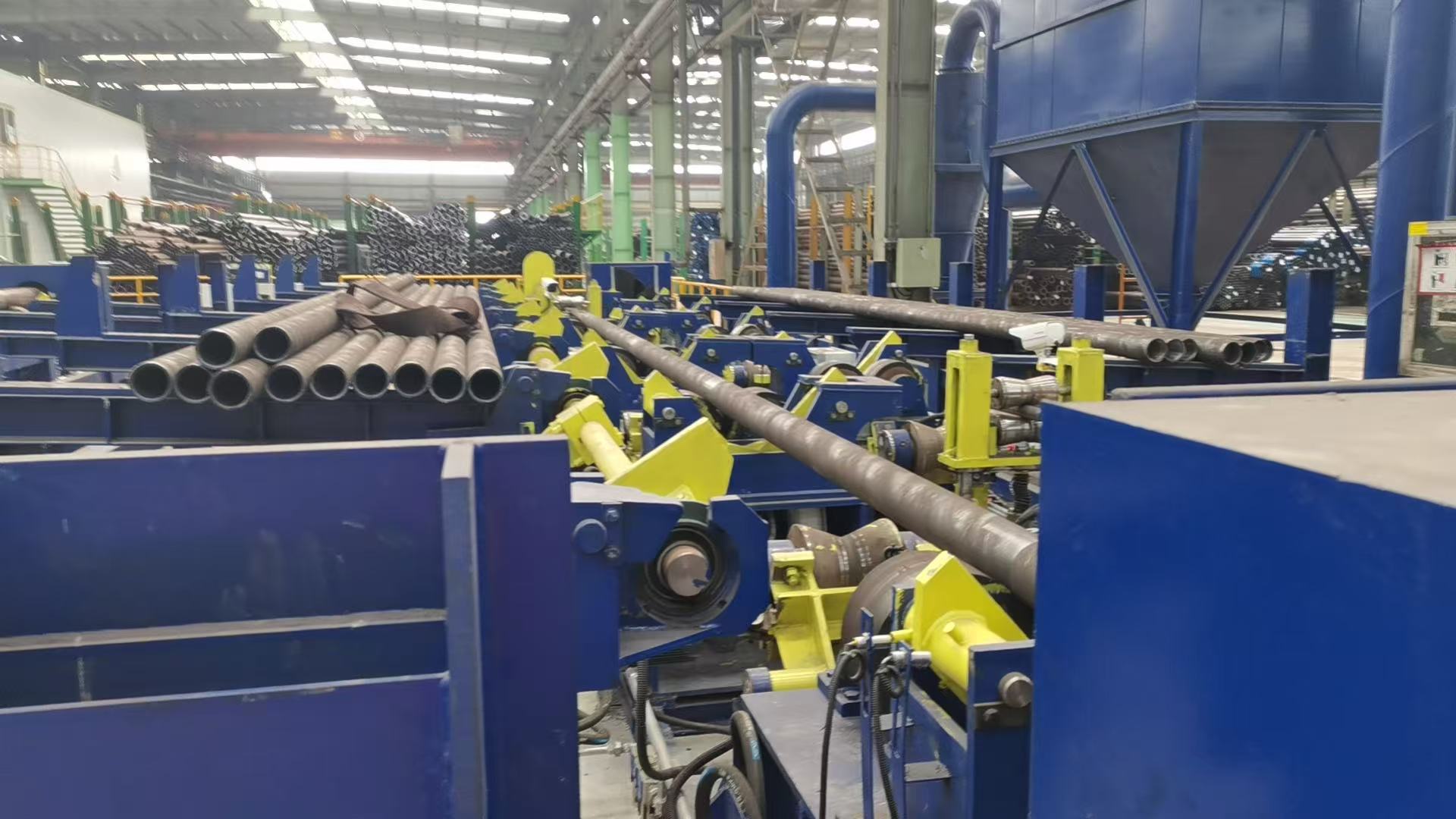
Machine configuration in a continuous steel pipe finishing setup. Image: West Machinery.
Selecting a steel pipe grinding machine is not only about comparing horsepower or spindle speed. Project fit determines whether the machine can operate reliably in your workshop, match your existing line, and sustain output without unscheduled stoppages. This guide explains how buyers can evaluate machine specifications and supplier capabilities against the actual conditions of a steel pipe grinding or polishing project.
What “Project Fit” Means for Steel Pipe Grinding Machines
For industrial buyers, project fit means the machine is compatible with the complete production environment: workpiece dimensions, material, required surface quality, available space, supporting equipment, operational mode, and workshop conditions. A technically capable machine may still fail on project fit if it is not designed for the workflow in which it will operate.
Grinding machines are used in round steel and steel pipe finishing to remove surface defects, oxide scale, rust, and burrs before further processing. The main equipment categories in this field include steel pipe grinding machines, round steel grinding machines, inner hole grinding machines, steel pipe external grinding machines, steel pipe internal grinding machines, steel pipe polishing machines, and multi-station grinding and polishing machines. Regardless of category, the same question applies before purchase: will this equipment deliver in the specific project environment?
Steel Pipe Grinding Project Scenarios and Machine Fit
Steel pipe grinding machines from West Machinery are designed for surface polishing, deburring, oxide scale removal, and precision finishing. The machines are used in metal surface treatment lines, steel pipe finishing lines, and round steel processing lines across steel manufacturing, metal processing, metallurgical industry, and hardware manufacturing. Typical supported materials include carbon steel, alloy steel, and SS304 stainless steel.
Project fit begins with verifying the material and the type of processing required:
- External surface preparation on round steel or pipes: steel pipe external grinding machine or external circular grinding machine.
- Internal bore finishing after cutting or heat treatment: inner hole grinding machine or steel pipe internal grinding machine.
- Hybrid external/internal or continuous finishing requirements: multi-station grinding machine and multi-station polishing machine configure multiple processing stations in one line.
- Scale removal and surface preparation before coating or cold drawing: steel pipe derusting machine or steel pipe derusting and polishing machine.
- High-volume round bar finishing: round steel peeling machine, steel pipe peeling machine, or a complete round steel finishing line.
These are not interchangeable categories. A buyer sourcing only a single grinding head may get an excellent machine that does not solve the full production bottleneck. Matching the equipment type to the line stage is the first level of project fit.
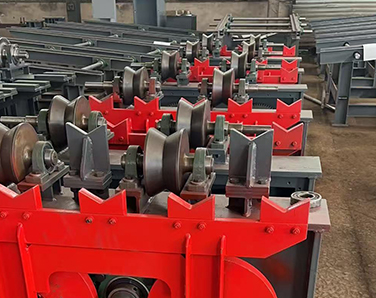
West steel pipe grinding machine configured for surface finishing. Image: West Machinery.
Six Technical Parameters That Determine Fit in a Production Project
Beyond the machine category, buyers should examine the core specifications of the grinder against their actual workpieces and processes. The following parameters appear on West grinding machine specifications for steel pipe and round steel processing:
1. Power range: 5.5–22 kW
The power range determines how aggressively the machine can grind different steel surfaces. Lower power is adequate for light polishing and deburring, while higher power levels are necessary for removing deeper defects, scale, or weld irregularities on larger pipes.
2. Processing diameter: 20–300 mm
The external diameter range determines which pipes or bars the machine can handle. If your product mix includes pipes outside that range, the machine will not be suitable without mechanical changes. Project fit means matching not only the current catalog but also the range of sizes you expect to process.
3. Processing length: 500–6000 mm
Handling length is critical in continuous production lines. A machine that handles 6000 mm stock can still handle shorter components, but a machine designed for short parts will require additional handling for 6-meter pipes. Buyers in the structural steel or energy-related tube business typically need the full 6000 mm capability.
4. Surface roughness: Ra ≤ 0.8 μm
Roughness requirement determines whether the project demands grinding, polishing, or a combined sequence. If the downstream process calls for a bright surface or Ra below the achievable threshold, a two-stage grinding and polishing setup or a multi-station finishing machine may be required.
5. Feed speed: 0.5–10 m/min and continuous operation
Feed speed and continuous operation mode determine line productivity. A machine that can only operate in short cycles may not satisfy a steel finishing line that runs continuously. West steel pipe grinding machines operate in continuous operation mode, making them suitable for line integration.
6. Power supply, protection, and environment
West machines in this class are configured for a power supply of 380V/50Hz, 3-phase, with a protection grade of IP54 on applicable models. IP54 means limited protection against dust and protection against water splashes, so installation location and enclosure details should be reviewed when the project involves high humidity or dense metallic dust.
| Field | West Grinding Machine Specification (Example: 3534) | Project Fit Question for Buyers |
|---|---|---|
| Power range | 5.5–22 kW | Does the line need heavy stock removal or light surface finishing? |
| Processing diameter | 20–300 mm | Is the full diameter range of your production covered? |
| Processing length | 500–6000 mm | Can the infeed/outfeed system manage your longest material? |
| Surface roughness | Ra ≤ 0.8 μm | Is the finish target achievable on all materials? |
| Feed speed | 0.5–10 m/min | Can the line speed match upstream and downstream equipment? |
| Power supply | 380V/50Hz, 3-phase | Does plant power match the machine requirement? |
| Protection grade | IP54 (example models) | Are dust and moisture levels controlled in the installation area? |
Representative specifications of West steel pipe grinding machines and corresponding project fit checks.
Workshop Conditions: Normal Environment with Wet or Dry Grinding
Buyers sometimes assume that grinding equipment requires special structural reinforcement or a dedicated isolated room. In many steel finishing projects, the requirement is simpler: the equipment operates in a normal workshop environment under dry or wet grinding conditions. This means standard workshop flooring, adequate space for conveyor integration, and basic dust and noise controls.
West steel pipe grinding machines are designed to handle both dry and wet grinding. The choice between dry and wet operation usually depends on material and finish requirements. Wet grinding can control heat and reduce dust, but it creates a slurry or coolant management requirement. Dry grinding may be simpler in an existing line but generates more airborne dust. Both working conditions are acceptable for these machines; the buyer should plan the auxiliary equipment accordingly.
Continuous Operation and Supporting Equipment Requirements
Steel finishing projects often involve long production runs. West grinding machines operate in continuous operation mode, but they are expected to be integrated with a conveyor system and a dust collector as supporting equipment. This is not an optional recommendation; it is a design requirement for a complete installation.
The conveyor system maintains consistent feed through the machine, allowing operators to focus on quality control rather than manually pushing material. The dust collector controls grinding dust and metal particulates, protecting both equipment and operators while keeping the surrounding workshop cleaner. When planning a new line or adding grinding capacity, the project budget should include these elements.
Why Supporting Equipment Affects Project Fit
A grinding machine cannot deliver continuous productivity in a line where material feeding and dust removal are handled manually. If intake and discharge operations remain manual, the machine cycle may be interrupted, and surface quality can become inconsistent. Buyers evaluating project fit should review the existing line in three areas:
- Infeed/outfeed material handling: roller tables, conveyors, or automated loading systems.
- Dust collection: extraction capacity sized to the grinding width and material removal rate.
- Process flow: placement of the machine in the line so grinding results are protected from subsequent contamination or damage.
Special Project Requirements: Dust-Proofing, Noise Reduction, and Stability
Certain metal finishing applications have special requirements in addition to basic grinding capability. These include dust-proof design, noise reduction features, and stable performance during continuous operation.
Dust-proof design matters when grinding generates fine metallic particles that can enter bearings, motors, and control cabinets. Noise reduction is relevant in workshops located near residential or mixed-use zones and in plants enforcing stricter occupational noise policies. Stable performance is not a marketing phrase; it refers to consistent machine behavior in long shifts under high load.
These requirements affect machine selection and installation decisions. For example, dust-proofing may require additional sealing around linear guides or a centralized dust collection connection. Noise reduction can be supported by motor covers, vibration isolation, or installation layout. The machine foundation must be sufficiently rigid to prevent vibration from affecting finish quality over time.
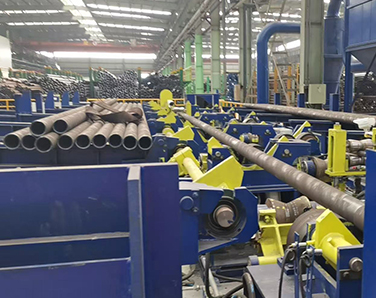
Grinding machine installation for continuous steel pipe polishing operations. Image: West Machinery.
Case Evidence: Steel Plant Grinding Machines in Indonesia and Iran
Project fit is best verified by evidence from comparable installations. West Machinery supplies grinding machines to steel plants outside China, including installations in Indonesia and Iran.
In Indonesia, a steel manufacturing plant uses five West units for steel pipe and round steel grinding and polishing. The stated highlight is adaptability to tropical climate conditions and reliable performance in high-load operation. The documented result is consistent product quality and improved processing efficiency under continuous production.
In Iran, a steel manufacturing plant operates eight West units for the same type of steel pipe and round steel grinding and polishing. The highlight notes adaptation to local working conditions and reliable performance in continuous operation. The documented result is stable surface quality and consistent production efficiency.
For procurement teams evaluating machines for comparable climates or operating conditions, these installations show that West machines have run in long-term continuous production in warm, high-load environments. They do not prove universal suitability, but they provide reference points for similar project requirements.
Step-by-Step: How to Check Project Fit Before Purchase
Procurement teams can reduce risk by completing a structured project-fit review. The following workflow may help in comparing supplier responses:
- Define the process boundary. State whether the machine will operate as part of a steel pipe finishing line, round steel processing line, or metal surface treatment line. List the operations around it, including upstream cut-off or descaling and downstream inspection or packing.
- Confirm the material and defect profile. Different materials react differently to grinding. Carbon steel, alloy steel, and stainless steel members may need different grinding pressure or wheel selection. Record whether the project requires removal of oxide scale, rust, burrs, weld seams, or a combination.
- Establish dimensional range. Measure the outside diameter range and maximum length of the workpieces. A machine with 20–300 mm processing diameter and 500–6000 mm length covers a substantial portion of typical round steel and pipe finishing requirements, but this must be verified against the actual product mix.
- Set quality targets. Define the required surface roughness and appearance. If grinding alone cannot achieve the finish target, plan a polishing stage. West grinding machines can achieve Ra ≤ 0.8 μm within their specification, but the achievable result depends on material, prior surface condition, and machine setup.
- Check environmental constraints. Review space, power supply, workshop temperature, humidity, and available dust collection points. Confirm whether the installation site provides the normal workshop environment the machine is designed for, or whether additional enclosure or climate control will be needed.
- Review operation mode and labor. Continuous operation mode requires dependable material feeding without long interruptions. If the line runs in shifts, confirm that the machine and supporting conveyor/dust systems are rated for that duty.
- Ask supplier for reference installations. Reference projects in similar industries and regions help validate assumptions. Availability of reference installations can confirm capability and identify potential issues in adapting to local conditions.
Common Pitfalls That Break Project Fit
Most procurement failures in grinding projects do not come from a single component failure; they come from mismatches in planning.
1. Buying machine capacity without line capacity
If the conveyor and handling system cannot keep pace, the machine will sit idle even though its maximum speed is higher than actual output.
2. Ignoring the complete material journey
Grinding improves surface quality, but if cleaned pipes are later transported through a dusty area without protection, the improved surface can be contaminated again. Project fit requires reviewing the entire finishing line, not only the machine work zone.
3. Confusing the machine base specification with site engineering
Foundations, compressed air, exhaust ducting, and electrical connections are often site responsibilities. Buyers should define what the buyer supplies and what the supplier includes before quoting.
4. Overlooking dust-proofing and noise requirements during setup
A machine that performs well in a clean grinding room may not satisfy dust-proof and noise-reduction requirements in an open workshop unless the supporting equipment is properly integrated.
5. Treating a single unit as an entire system
A complete steel pipe finishing line often needs multiple stations. Multi-station grinding machine and multi-station polishing machine configurations are intended for projects where one machine must handle several sequential operations without re-fixturing.
Supplier Capability Review: West and OEM Flexibility
Project fit extends beyond the equipment specification to the supplier’s capacity to adapt. Jiangyin West Machinery Manufacturing Co., Ltd. is located in Jiangyin City, Jiangsu Province, China. The company produces grinding machines, steel pipe grinding machines, round steel grinding machines, internal hole grinding machines, and round steel finishing lines, and also manufactures and processes metallurgical special equipment, general equipment, and related accessories.
West offers OEM production with customization of voltage, control system, processing range, color, and logo. This matters for projects integrated into established plants: voltage and control systems must match local electrical standards, while processing range may need to be adjusted for non-standard diameters or lengths. A 380V/50Hz, 3-phase machine is common for many export markets, but buyers should still confirm compatibility with local supply.
Capacity and lead time are also part of project fit. West has a monthly production capacity of 30 units and a standard lead time of 20 days in OEM mode, with a minimum order quantity of one unit. The company states that 100% of machines are tested before delivery and offers remote support after sales. For project planning, these published figures allow a buyer to compare announced production schedules against actual quoting lead time.
Why Company Manufacturing Structure Matters to Buyers
West operates three workshops covering welding, machining, and assembly. The company currently employs 78 staff, including various types of technical personnel, and occupies approximately 6,000 square meters. The presence of welding and machining inside the company supports modification work for customized grinding machine solutions without outsourcing every key step.
Comparison Points: Supplier Line and Project Needs
| Buyer Question | What to Verify | West Documentation |
|---|---|---|
| Can the supplier build to project requirements? | OEM customization scope | Voltage, control system, processing range, color, logo |
| Can the supplier handle the order volume and schedule? | Monthly capacity, lead time | 30 units/month; 20 days in OEM mode |
| Is the machine thoroughly checked before shipment? | Quality control policy | 100% test |
| Is post-sale technical help available? | Support model | Remote support |
| Is the supplier structurally capable of customization? | In-house manufacturing capability | Welding, machining, assembly workshops; 6,000 m² facility |
Supplier evaluation items derived from West Machinery’s stated OEM and production capabilities.
Reference Comparison: Manual Grinding and Conventional Process
Many buyers considering a grinding machine project still compare against manual grinding or conventional manual finishing lines. A steel pipe grinding machine replaces manual operations with a machine-guided feed that produces a more consistent surface finish and reduces direct operator exposure to grinding dust. Manual grinding results depend heavily on individual skill and can vary across a shift or between workers.
For projects where consistency matters downstream, machine grinding is usually preferred even when manual capacity appears cheaper. Manual finishing may also create bottlenecks when the line runs continuously or when processing large 6000 mm workpieces. Buyers evaluating the transition from manual to machine grinding should assess required output, quality consistency targets, and dust/noise control in the current manual process.
Alternative Formulations of the Same Project-Fit Search
Buyers may search for equipment names that describe specific parts of the same project requirement. These formulation differences matter when sending requests for quotation to suppliers. Common terms include:
- Steel pipe polishing machine and steel pipe external polishing machine for final finish requirements.
- Steel pipe internal polishing machine and steel pipe internal grinding machine for bore finishing.
- Round steel peeling machine and steel pipe peeling machine for scale removal before finishing.
- Square billet grinding machine for square billet surface preparation.
- Steel pipe derusting machine for rust removal before coating or further processing.
- External circular grinding machine for cylindrical external surfaces.
- Double-head grinding machine and multi-station grinding machine for projects with multiple feed or head arrangements.
- Large diameter steel pipe grinding machine for large-size lines beyond the standard range.
- Round steel finishing line for an integrated set of equipment rather than a single machine.
Using the correct terminology and specifying whether the application is external grinding, internal grinding, polishing, peeling, or integrated line finishing helps suppliers respond with the right configuration.
FAQ
What grinding machine project requirements must be checked before purchasing a steel pipe grinding machine?
Buyers should first define the project scope: whether the machine will handle internal or external surfaces, whether it needs polishing capability, which materials will be processed, and how the machine will be integrated into the line. If multiple surface operations are required, consider a multi-station configuration or a round steel finishing line. Confirm that the machine’s power, processing diameter, processing length, and power supply match the actual physical constraints of the plant.
What are the standard technical specifications of West steel pipe grinding machines?
West grinding machines for steel pipe and round steel applications carry representative specifications based on model configuration. Documented ranges include power of 5.5–22 kW, processing diameter of 20–300 mm, processing length of 500–6000 mm, surface roughness of Ra ≤ 0.8 μm, feed speed of 0.5–10 m/min, and 380V/50Hz, 3-phase power supply. Some models list IP54 protection as a reference grade. Exact values should be verified against the specific model and customization agreed with West.
What supporting equipment is needed when installing a West grinding machine?
A conveyor system and a dust collector are the required supporting equipment for normal integration. The machine operates in a normal workshop environment under dry or wet grinding conditions. For projects with dust and noise constraints, the installation should include dust-proofing measures and noise reduction features.
Can West grinding machines run in continuous production lines?
Yes. West steel pipe grinding machines are designed for continuous operation mode. Real installations in steel manufacturing plants in Indonesia and Iran have run the machines for long-term continuous use.
What is the planned lead time and minimum order quantity for a customized grinding machine?
West’s OEM mode capacity is 30 units per month, with a lead time of 20 days and a minimum order quantity of one unit. The company provides OEM customization of voltage, control system, processing range, color, and logo. Buyers planning a project should request a quotation with current lead time confirmation, since lead time can vary with workload and configuration.
If you are evaluating a grinding machine for a steel pipe or round steel finishing project, you can request a sample, quotation, or technical clarification from West Machinery.
Website: www.wstjxcn.com
Email: 348357379@qq.com
WhatsApp: +86 15261616622
Have Questions or Need More Details?
Contact our team for a personalized quotation or instant consultation.
Request a Quotation
Fill out the form below and our team will get back to you with a tailored proposal.
WhatsApp Direct Chat
Prefer to chat in real-time? Message us on WhatsApp for instant assistance & quick answers.
- Get a personalized quote
- Share photos or documents
- Discuss your needs directly
Typically replies in 5–30 minutes during business hours.