Decoding Steel Pipe Grinding Machine Specifications: Technical Parameters & Process Quality
Decoding Steel Pipe Grinding Machine Specifications: How Technical Parameters and Manufacturing Processes Define Quality
When sourcing a steel pipe grinding machine for your production line, the datasheet alone can feel overwhelming. Terms like “power range 5.5–22 kW” or “protection grade IP54” may appear abstract until you understand their direct impact on throughput, surface quality, and machine longevity. This article is written for procurement professionals and plant managers who want to move beyond superficial spec comparisons and truly grasp how technical parameters and the manufacturer’s production craftsmanship influence the final product quality.
We will use the real-world example of Jiangyin West Machinery Manufacturing Co., Ltd (brand: West), an ISO 9001:2015 certified Chinese manufacturer, to illustrate how a well-engineered grinding machine – from its steel pipe grinding, round steel grinding, to internal hole grinding configurations – delivers consistent results. You will learn what each parameter means, how West’s manufacturing process ensures reliability, and how to evaluate suppliers before making a capital investment.
What Is a Steel Pipe Grinding Machine and Why Does It Matter?
- How it works: The workpiece is rotated or fed linearly while grinding wheels or abrasive belts contact the surface under controlled pressure and speed. Cooling fluid is often applied to prevent thermal damage.
- Why it’s important: A high-quality grinding operation directly affects downstream coating adhesion, welding quality, and final product aesthetics. Poor grinding can lead to rejects, rework, and customer complaints.
- Who uses it: Steel manufacturing plants, metal processing workshops, metallurgical industry, hardware manufacturing, and pipe finishing lines worldwide.
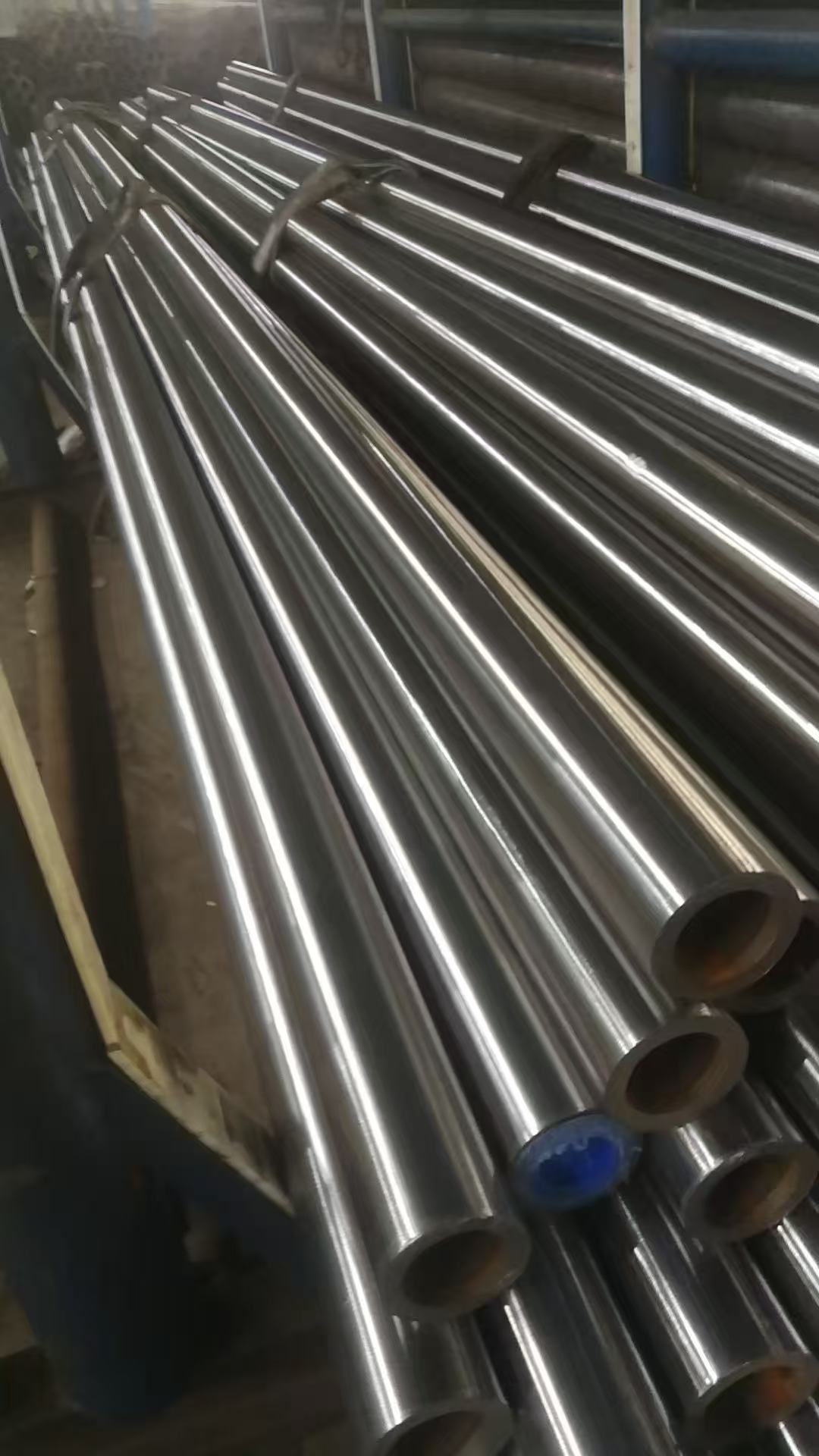
- What problems it solves: Removes oxide scale after hot rolling, eliminates surface scratches, corrects ovality, and prepares the surface for painting, galvanizing, or further machining.
Industry Background: The Growing Demand for Precision Surface Finishing
In steel manufacturing, the global trend toward higher value-added products drives the need for grinding machines that can deliver consistent surface quality at high throughput. Markets in Southeast Asia, the Middle East, Europe, and the Americas – where West Machinery exports 70% of its output – increasingly require automated steel pipe grinding machines that reduce labor dependence and achieve tight tolerances. Buyers are no longer satisfied with “good enough” surface finish; they demand measurable, repeatable quality backed by certification and field-proven case studies.
Detailed Explanation of Key Technical Parameters
The table below maps the common specifications of West’s steel pipe grinding machine (model: grinding machine, type: steel pipe/round steel grinder) to their practical meaning. Understanding these parameters is the first step in selecting the right equipment.
| Parameter | West Typical Range | What It Means for Your Production |
|---|---|---|
| Power (kW) | 5.5 – 22 kW | Higher power allows faster material removal on thick-walled pipes (e.g., > 10 mm wall) and enables grinding of alloy steels. For thin-walled tubes, lower power is sufficient and more energy-efficient. |
| Processing Diameter | 20 – 300 mm | Covers most common pipe and round bar sizes. If your product mix includes diameters outside this range, you need a custom solution (West offers OEM customization of processing range). |
| Processing Length | 500 – 6000 mm | Matches standard pipe lengths. For longer pipes (e.g., 12 m), multiple passes or a specialized long-bed machine may be required. |
| Surface Roughness | Ra ≤ 0.8 μm | A common industry benchmark for general finishing. For mirror-like finishes (Ra < 0.2 μm), additional polishing stages may be needed. This value is achievable with West’s equipment under normal conditions. |
| Feed Speed | 0.5 – 10 m/min | Lower speeds improve finish quality; higher speeds boost throughput. The optimal setting depends on material, diameter, and desired Ra. |
| Power Supply | 380V/50Hz, 3Phase | Standard for industrial plants in many countries. West can customize voltage (e.g., 415V/60Hz) for different markets as part of its OEM service. |
| Protection Grade | IP54 | Means the machine is protected against dust ingress (limited) and splashing water. Suitable for typical workshop environments with moderate dust and coolant exposure. |
How Manufacturing Processes Affect Long-Term Quality
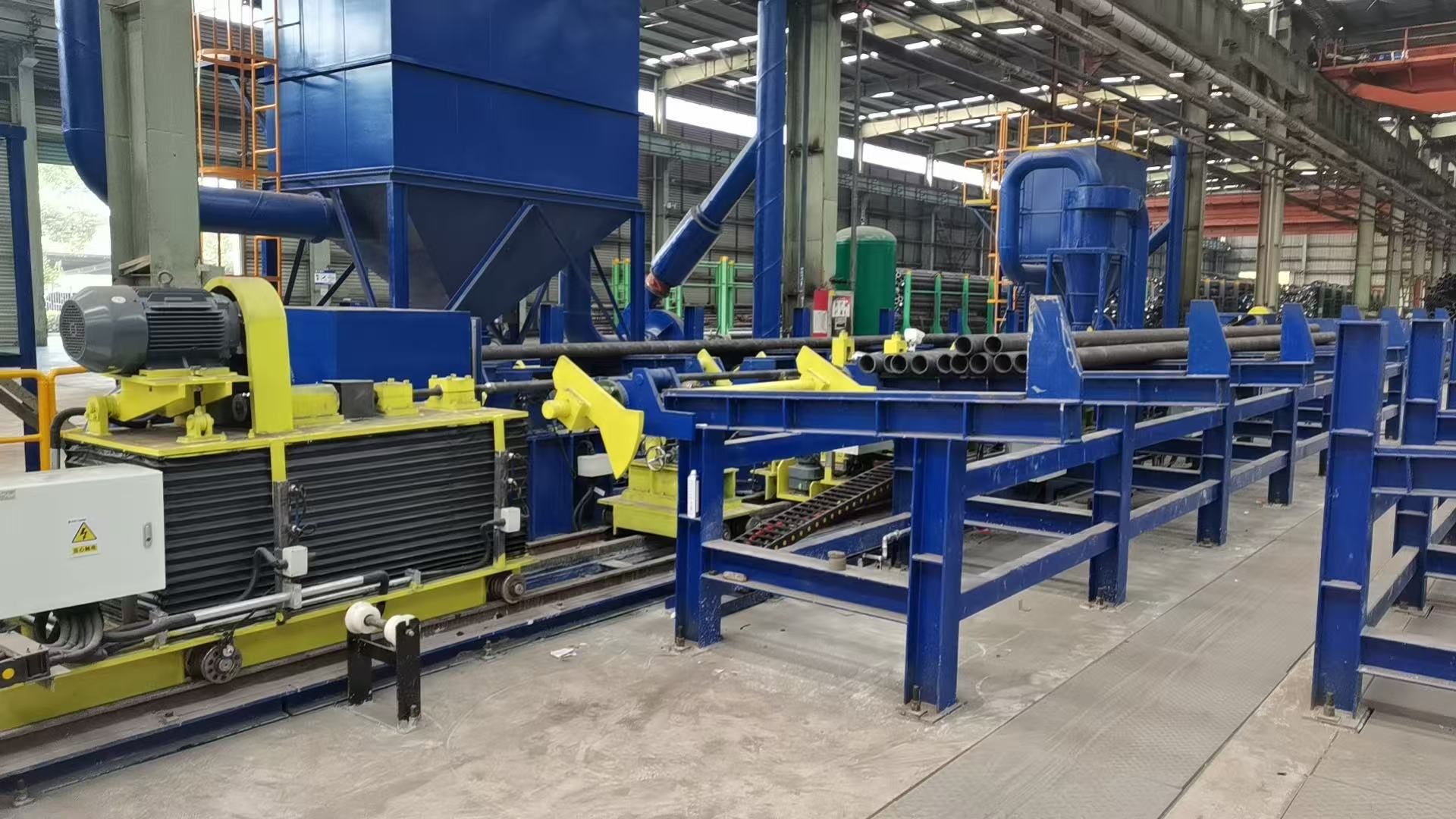
Behind every specification is the manufacturer’s production process. West Machinery operates three workshops – welding, machining, and assembly – covering 6,000 m². Here’s how each stage influences the final machine’s performance:
1. Welding Workshop – Structural Integrity
The machine base and frame are welded from heavy steel plates. West employs experienced welders and follows controlled welding procedures to minimize distortion. A rigid, stress-relieved frame ensures that the grinding head maintains perpendicularity even under high loads, directly affecting surface evenness.
2. Machining Workshop – Precision Components
Critical parts like spindle housings, guide rails, and grinding wheel flanges are machined to tight tolerances. West’s 25 R&D engineers (out of 78 total employees) design fixtures that enable repeatable accuracy. For example, the multi-station grinding machine variants require perfectly aligned axes – any deviation would cause uneven wear and poor finish.
3. Assembly Workshop – System Integration
Final assembly includes alignment of the conveyor system, installation of the dust collector (often matched as auxiliary equipment), and calibration of the feed mechanism. West performs 100% functional testing before shipping – a practice that catches issues like vibration, noise, or inconsistent feed speed early.
4. Quality Management System
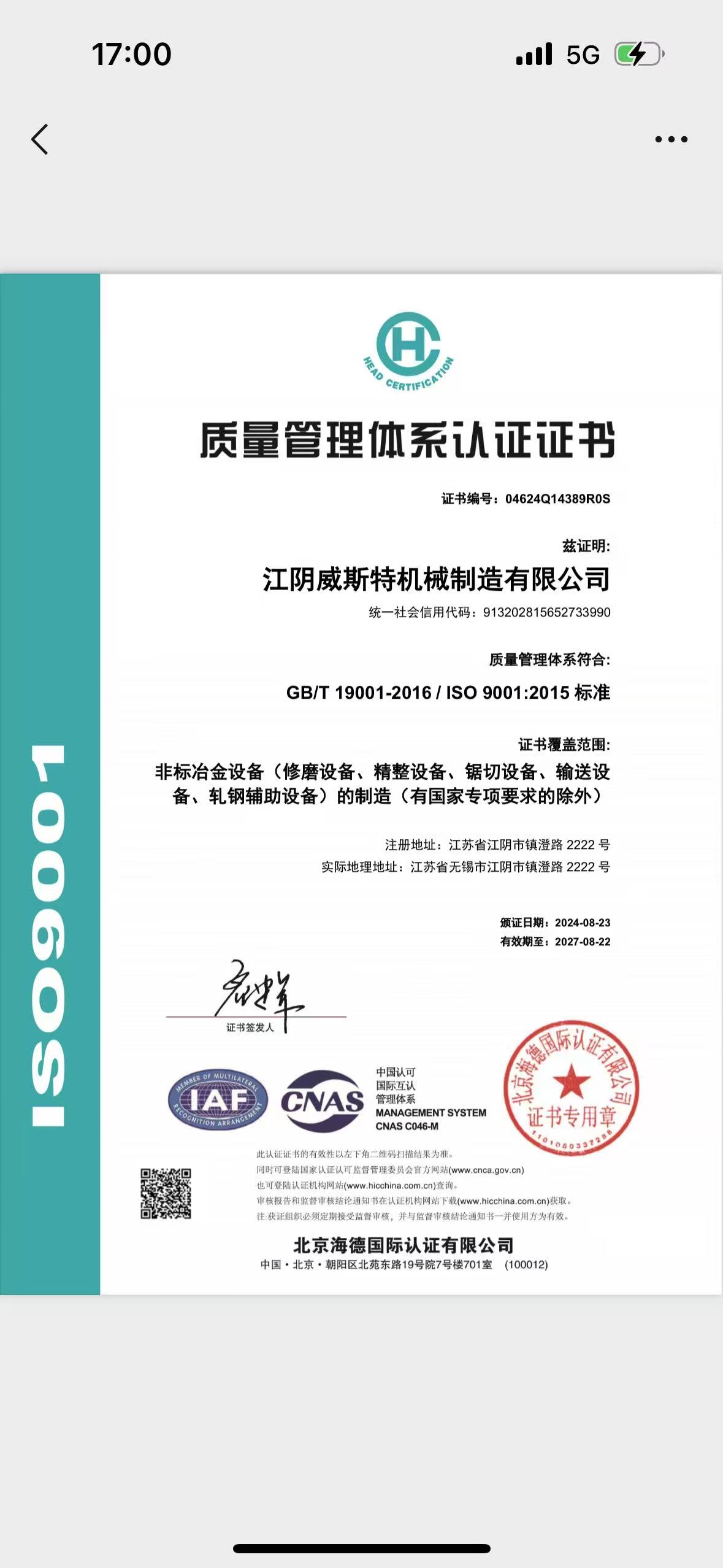
West holds ISO 9001:2015 certification (certificate No. 04624Q14389R0S) issued by Beijing Haide Certification Co., Ltd, valid until August 2027. The certificate covers the design and manufacture of grinding machines for steel pipe and round steel. This third-party audit ensures documented processes for supplier management, production control, and continuous improvement.
Step-by-Step: How to Evaluate a Steel Pipe Grinding Machine Supplier’s Technical Competence
- Define your processing requirements: List your pipe diameter range, length, material (carbon steel, alloy steel, SS304 stainless steel), target surface roughness, and desired throughput (pieces per hour).
- Compare specifications side-by-side: Use a table like the one above. Pay attention to power vs. diameter limitations – a machine with 5.5 kW may struggle with 300 mm stainless steel pipes.
- Examine the manufacturing process: Ask for details about welding, machining, and assembly quality control. Visit the factory (or request a virtual tour) to see the workshops.
- Check certifications and references: ISO 9001:2015 is a baseline. Ask for customer references, especially for similar applications. West has supplied 5 units to an Indonesian steel plant and 8 units to an Iranian plant, both operating continuously for years with consistent quality.
- Evaluate customization capabilities: If your plant uses non-standard voltage (e.g., 440V/60Hz) or requires a specific control system (PLC brand, communication protocol), ensure the supplier can modify the machine. West offers customization of voltage, control system, processing range, color, and logo.
- Demand pre-shipment testing: A reliable manufacturer like West conducts pre-shipment testing (acceptance) and can provide test reports showing actual surface roughness readings.
Real-World Use Cases: West Machinery in the Field
Case 1: Steel Manufacturing Plant in Indonesia
This client purchased 5 units of West’s steel pipe grinding machine for grinding and polishing steel pipes and round bars. Operating in a tropical climate (high humidity, frequent rain), the machines needed reliable performance. After long-term continuous production, the results showed consistent product quality and improved processing efficiency. The IP54 protection grade proved adequate to resist moisture ingress.
Case 2: Steel Manufacturing Plant in Iran
A plant in Iran acquired 8 units for the same application. Despite local working conditions with higher ambient temperatures and occasional dust, the machines maintained stable surface quality and production efficiency. This case demonstrates the adaptability of West’s engineering – the equipment can be tuned to local power supply and cooling needs.
Common Buyer Concerns About Steel Pipe Grinding Machines (FAQ)
Power selection depends on material hardness and pipe wall thickness. For standard carbon steel pipes up to 150 mm diameter, 11 kW is usually sufficient. For alloy steel or pipes above 200 mm, consider 15–22 kW. West’s engineers can recommend based on your sample.
Ra ≤ 0.8 μm meets most industrial requirements for coating preparation and general finishing. If you need a mirror finish (e.g., for hydraulic cylinder tubes), you may need a downstream polishing machine (e.g., West’s steel pipe polishing machine).
IP54 means the machine is protected against dust accumulation that could interfere with operation, and against water splashes from any direction. It is suitable for typical dry or wet grinding environments. For extremely dusty conditions, a higher IP rating or additional dust extraction may be needed.
Request case studies with contactable references. West provides examples from Indonesia and Iran. Also check certification validity (ISO 9001:2015) and ask about their quality control process – West performs 100% testing before shipment.
If your plant uses non-standard voltage (e.g., 440V/60Hz in North America), requires a specific PLC brand (Siemens, Allen-Bradley), or needs a special processing range (e.g., diameter up to 400 mm), OEM customization ensures the machine integrates seamlessly. West offers MOQ of 1 unit and delivery within 20 days.
Conclusion
Selecting a steel pipe grinding machine is not just about matching numbers on a spec sheet. The true quality lies in how those parameters are achieved – through robust welding, precision machining, rigorous assembly, and a certified quality management system. By understanding the interplay between technical specifications and manufacturing processes, you can differentiate between a supplier that delivers consistent, reliable performance and one that only looks good on paper.
West Machinery (Jiangyin West Machinery Manufacturing Co., Ltd) exemplifies a manufacturer that combines practical engineering with ISO 9001:2015 quality assurance, backed by field-proven installations in demanding environments. Whether you need a steel pipe external grinding machine, an internal hole grinding machine, or a complete round steel finishing line, the same principles apply: demand clear specifications, inspect the production process, and verify through case studies and certifications.
Ready to evaluate a grinding machine that meets your exact needs?
Contact West Machinery for a detailed technical consultation, pre-shipment test arrangements, and a customized solution.
📧 348357379@qq.com | 📞 +86 15261616622 | 🌐 www.wstjxcn.com
Address: No. 2222, Zhencheng Road, Jiangyin City, Jiangsu Province, China
Have Questions or Need More Details?
Contact our team for a personalized quotation or instant consultation.
Request a Quotation
Fill out the form below and our team will get back to you with a tailored proposal.
WhatsApp Direct Chat
Prefer to chat in real-time? Message us on WhatsApp for instant assistance & quick answers.
- Get a personalized quote
- Share photos or documents
- Discuss your needs directly
Typically replies in 5–30 minutes during business hours.