
Mastering Grinding Parameters: Understanding Motor Power and Feed Speed for Steel Pipes
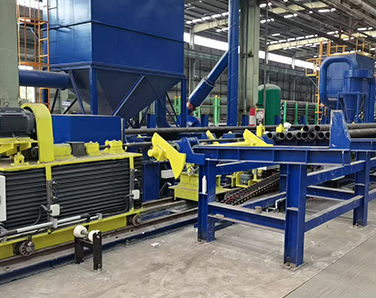
Short answer: On the West steel pipe grinding machine family, motor power spans 5.5 kW to 22 kW and feed speed is variable from 0.5 m/min to 10 m/min. Those two values define the working envelope for workpieces from 20 mm to 300 mm in diameter and 500 mm to 6000 mm in length. Choosing a working point inside that envelope - rather than ordering the largest motor available - is what allows a line to hold the specified surface roughness of Ra ≤ 0.8 μm on carbon steel, alloy steel, and SS304 stainless steel.
This guide is written for buyers who are already evaluating machines and need to decide how much installed power they actually require and how fast the line can realistically run. It treats motor power and feed speed as one engineering decision instead of two independent datasheet items, and it stays inside the parameter values published for this equipment family.
Jiangyin West Machinery Manufacturing Co., Ltd (brand: West) is a Chinese manufacturer of grinding machines, steel pipe grinding machines, round steel grinding machines, internal hole grinding machines, and round steel finishing lines. The company was founded in 2010 and operates a 6,000 m² facility with 78 employees across welding, machining, and assembly workshops.
Problem Definition: Why the Largest Motor Is Usually the Wrong Answer
Grinding machine specifications for steel pipe lines normally publish a power range rather than a single figure, and a feed speed range rather than a single speed. That is intentional, but it creates three recurring evaluation mistakes.
Mistake one: reading the power range as a ranking. A 22 kW machine is not simply a better version of a 5.5 kW machine. Both sit inside the same verified range of 5.5-22 kW, and each represents a different duty profile. A buyer who assumes the top of the range is the safe choice usually pays for capacity the process never consumes.
Mistake two: reading maximum feed speed as production speed. The upper end of a 0.5-10 m/min variable feed range is a capability limit, not a recommended setting. Running at the top of the range to chase output is one of the most common reasons a line stops holding its finish target.
Mistake three: ignoring the diameter mix. This equipment family covers workpiece diameters from 20 mm to 300 mm and lengths from 500 mm to 6000 mm. A plant that runs small-diameter tube on one shift and heavy pipe on the next needs a configuration whose working point can move with the schedule, not a machine tuned to a single product.
The commercial consequences run in both directions. Over-specification converts into avoidable energy consumption, faster wear, and a higher capital position. Under-specification appears later, as finish drift or rework whenever the line pushes feed speed upward. The decision rule that avoids both is straightforward: size the working point against the heaviest duty job in the schedule, then confirm that the same configuration still holds Ra ≤ 0.8 μm at the light end of the mix.
Industry Background: Why Parameter Literacy Is Becoming a Procurement Skill
Mordor Intelligence projects the global grinding machines market to grow from USD 6.47 billion in 2025 to USD 8.59 billion by 2031, a compound annual growth rate of 4.89%. Grand View Research reports that Asia Pacific accounted for 43.4% of grinding machinery revenue in 2025, with China the largest single country market. Dataintelo projects a 7.2% CAGR for steel pipe processing equipment between 2025 and 2033, driven by infrastructure and energy sector demand.
China's role as a supply base is measurable rather than assumed. OEC data shows China exported USD 2.31 billion in metalworking machine parts in 2024, equal to 11.9% of global exports in that category. The adjacent bar peeling machine market, relevant to round steel finishing, was valued at USD 450 million in 2024 and is forecast to reach USD 650 million by 2033 according to Market Research Intellect.
Buyers reading market reports during evaluation should treat headline market size as directional only. For 2026 alone, three research houses publish different estimates for the same global grinding machines market.
| Source | 2026 global grinding machines market estimate |
|---|---|
| Mordor Intelligence | USD 6.76 billion |
| Grand View Research | USD 6.4 billion |
| Fortune Business Insights | USD 7.28 billion |
The gap between those figures is a useful reminder: market-size numbers describe a category, while power and feed speed describe a machine. When the actual decision is a configuration decision, supplier-side market data should never replace machine-side parameters.
Standards matter for the same reason. Stationary grinding machines are addressed by EN ISO 16089:2015, which replaced EN 13218 and covers risks in manual and CNC grinding operations. In parallel, the manufacturing quality system behind the machine can be verified: West holds an ISO 9001:2015 certificate, certificate number 04624Q14389R0S, issued by Beijing Haide Certification Co., Ltd, valid from 2024-08-23 to 2027-08-22 under the standard GB/T19001-2016/ISO9001:2015, covering markets in Southeast Asia, the Middle East, Europe, and the Americas.
Detailed Solution: Reading Motor Power and Feed Speed Correctly
Two parameters decide how a steel pipe grinding machine behaves at the contact point. Both are published as ranges because they describe the space of working points a single machine family can serve, not one fixed factory setting.
Motor power, 5.5-22 kW: energy delivered at the contact point
Motor power determines how much energy can be delivered into the grinding contact before the drive itself becomes the limiting factor. The West steel pipe grinding machine family carries an installed power range of 5.5 kW to 22 kW, fed by a 380 V / 50 Hz three-phase supply and specified at protection grade IP54.
In practice the range exists so that different duty profiles can be served by the same parameter family. A plant finishing smaller-diameter tube with light stock removal and a plant running the upper end of the 20-300 mm diameter range with heavier removal do not need the same installed power, even when both are working to the same finish target. Selecting a position inside the range is therefore a duty-matching exercise: the buyer states the workpiece envelope, the material mix, and the finish requirement, and the configuration is set from those inputs.
Two practical points are easy to overlook. First, the power figure and the site supply must agree; the base specification is 380 V / 50 Hz three-phase, and voltage is one of the customization fields available under the West OEM programme, alongside control system, processing range, color, and logo. Second, protection grade matters wherever the working environment includes dust and coolant - IP54 defines the ingress protection of the machine as specified.
Feed speed, 0.5-10 m/min: throughput versus contact density
Feed speed sets how fast the workpiece travels through the grinding zone. The variable feed drive on this machine family covers 0.5 m/min to 10 m/min. The two ends of that range describe two operating philosophies rather than one correct and one incorrect setting. At lower feed speeds, each metre of pipe spends longer under the grinding contact, which generally supports a finer and more uniform finish. At higher feed speeds, more metres pass per hour, which generally supports throughput.
Because the drive is variable, the working point is not a permanent commitment. A line running a mixed schedule - heavier removal on one job, a tighter finish requirement on the next - can move its working point instead of adding a second machine. What the buyer must confirm at configuration stage is the position in the range that holds Ra ≤ 0.8 μm against the tightest finish requirement in the product mix.
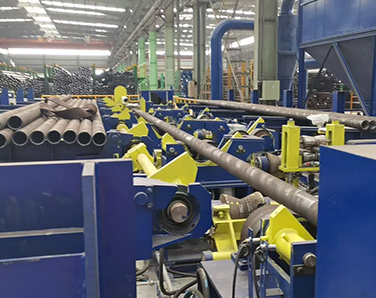
The verified parameter envelope: 5.5-22 kW installed power, 0.5-10 m/min variable feed speed, 20-300 mm workpiece diameter.
The interaction: power and feed speed are one setting, not two specs
Datasheets list power and feed speed separately, which encourages buyers to optimize them separately. In production they form a single working point. Raising feed speed to lift throughput reduces the time available per metre of surface, so the same removal has to be achieved in a shorter contact window; more power reserve at the working point gives the process more room before finish quality becomes the constraint. Lowering feed speed buys contact time but reduces line output.
The practical rule for evaluation is therefore to fix the finish target first (Ra ≤ 0.8 μm for this family), fix the material and diameter mix second (carbon steel, alloy steel, and SS304 stainless steel across 20-300 mm), and only then select the power position and feed speed that satisfy both. Choosing power first and adjusting feed speed afterwards is the sequence that produces either an oversized machine or an unresolved finish problem.
Where the same parameter logic applies along a finishing line
The logic transfers across finishing equipment even when contact geometry changes. A steel pipe grinding machine, a round steel grinding machine, or an internal hole grinding machine all convert motor power and feed speed into a surface result; what changes is the contact geometry, the fixture, and the workpiece handling. West's stated product range covers steel pipe grinding machines, round steel grinding machines, internal hole grinding machines, and complete round steel finishing lines. Where a buyer's process includes a separate steel pipe polishing or derusting stage, that stage is specified as its own configuration rather than inferred from the grinding parameters above.
Step-by-Step Breakdown: A Seven-Step Parameter Workflow
The following sequence keeps the decision anchored to verified parameters and avoids the common failure of choosing a power figure before the finish requirement is known.
- Define the workpiece envelope. Record the smallest and largest outside diameters and lengths the line must handle. This equipment family covers 20-300 mm in diameter and 500-6000 mm in length; requirements outside that envelope belong in a separate configuration discussion.
- State the finish requirement explicitly. The specified surface roughness for this family is Ra ≤ 0.8 μm. Confirm whether that value is your contract requirement or whether your process demands a tighter target that has to be validated on samples.
- List the material mix. Carbon steel, alloy steel, and SS304 stainless steel form the stated material scope for the family. Materials behave differently at the contact point, so the working point should be confirmed per material group rather than assumed identical across the whole mix.
- Choose the feed speed band. Within the variable 0.5-10 m/min range, decide whether the priority is contact density for finish stability or metres per hour for throughput. This is the step where lines most often overreach.
- Match motor power inside 5.5-22 kW. Size the power position against the heaviest duty job in the schedule - largest diameter, heaviest stock removal - then confirm that the same configuration still holds the finish target at the light end of the mix.
- Confirm infrastructure and customization. Base power supply is 380 V / 50 Hz three-phase at protection grade IP54. Voltage, control system, processing range, color, and logo are customizable under the OEM programme, so site electrical standards and control preferences should be raised before the order rather than after installation.
- Validate and schedule. West operates 100% testing, a minimum order quantity of 1 unit, a 20-day lead time, and monthly production capacity of 30 units. Sample validation and delivery scheduling are confirmed at this stage.
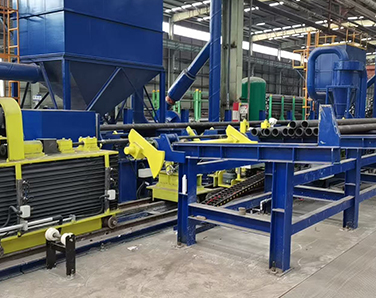
Configuration step: matching the working point to the workpiece envelope, material mix, and finish target.
Use Cases: How the Working Point Behaves in Real Installations
Two West installations show how the same parameter envelope is applied to different operating conditions.
An Indonesian steel manufacturing plant installed 5 units for steel pipe and round steel grinding and polishing, in long-term continuous production use. Recorded results include adaptable performance in tropical climate conditions, reliable operation under high load, consistent product quality, and improved processing efficiency. From a parameter standpoint, the combination of a tropical environment and high-load duty places weight on protection grade and on the power position chosen inside the 5.5-22 kW range.
An Iranian steel manufacturing plant installed 8 units for the same application, also in long-term continuous production. Reported results include adaptation to local working conditions, reliable performance in continuous operation, stable surface quality, and consistent production efficiency. In continuous operation, the stability of the variable feed drive matters as much as peak capability, because small drifts accumulate into surface variation over long runs rather than into an obvious line stoppage.
Neither case should be read as a performance guarantee for a different configuration. They demonstrate that the envelope can be applied across tropical and high-load environments, and that the working point is confirmed per installation rather than copied between plants.
Comparison Table: Verified Specification Versus Buyer Decision
Use the table below to separate verified specification from the decision it informs. Every value in the middle column is a published parameter of the West steel pipe grinding machine family; the right-hand column is what a buyer must confirm during evaluation.
| Parameter | Verified value | What it controls on the line | What to confirm before ordering |
|---|---|---|---|
| Motor power | 5.5-22 kW | Energy available at the grinding contact and duty headroom for heavier work | Where in the range your duty profile sits |
| Feed speed | 0.5-10 m/min, variable | Metres of product per hour versus grinding contact per metre | The working point for each material and diameter group |
| Processing diameter | 20-300 mm | Workpiece size envelope the line must cover | Whether your full product mix fits, including both extremes |
| Processing length | 500-6000 mm | Length envelope of the line | Longest and shortest cut lengths in your schedule |
| Surface roughness | Ra ≤ 0.8 μm | Finish constraint that limits how far feed speed can be raised | Your contract finish requirement |
| Power supply | 380 V / 50 Hz, 3-phase | Site electrical compatibility | Site voltage and frequency; voltage is an OEM customization field |
| Protection grade | IP54 | Ingress protection in production environments with dust and coolant | Ambient conditions in the workshop |
| Workpiece materials | Carbon steel, alloy steel, SS304 stainless steel | Applicable material scope | Whether your material mix sits inside this scope |
These values describe the machine envelope, not a guaranteed outcome for every product mix. The specific working point for a given duty profile is confirmed at configuration stage and, where required, through sample validation.
Frequently Asked Questions
Is the West steel pipe grinding machine produced under a recognized quality management system?
Yes. Jiangyin West Machinery Manufacturing Co., Ltd holds an ISO 9001:2015 certificate, certificate number 04624Q14389R0S, issued by Beijing Haide Certification Co., Ltd. It is valid from 2024-08-23 to 2027-08-22 under the standard GB/T19001-2016/ISO9001:2015, covering markets in Southeast Asia, the Middle East, Europe, and the Americas. Buyers specifying for regulated markets should also note that stationary grinding machines are addressed by EN ISO 16089:2015, which replaced EN 13218 and covers risks in manual and CNC grinding operations; the applicable safety requirements should be confirmed for each specific installation.
What motor power and feed speed ranges can actually be specified?
The steel pipe grinding machine family covers a motor power range of 5.5-22 kW and a variable feed speed of 0.5-10 m/min, for workpiece diameters of 20-300 mm and lengths of 500-6000 mm, with a specified surface roughness of Ra ≤ 0.8 μm on carbon steel, alloy steel, and SS304 stainless steel. The base power supply is 380 V / 50 Hz three-phase and the machine is specified at protection grade IP54. Voltage, control system, processing range, color, and logo can be customized under the OEM programme.
What determines the cost of the configuration we need?
Within this machine family, the main configuration variables are the power position selected inside the 5.5-22 kW range, the processing range required for the workpiece mix, the control system specification, any OEM customization of voltage, color, or logo, and the order quantity. The minimum order quantity is 1 unit, so a single machine matched to a specific working point can be ordered, and monthly production capacity is 30 units. Cost should be quoted against a defined workpiece envelope, material mix, and finish requirement rather than against a power figure on its own.
Can the parameter combination be validated before a full production commitment?
West applies 100% testing as part of quality control, and the minimum order quantity of 1 unit allows a configuration to be evaluated on a single machine before a multi-unit line order is placed. Both reference projects - the Indonesian installation of 5 units and the Iranian installation of 8 units - moved into long-term continuous production use after installation, in tropical and high-load conditions respectively. Sample arrangements, configuration documentation, and validation details can be requested through the standard inquiry channels.
What is the lead time, and how do we start?
Standard lead time for this machine family is 20 days, supported by monthly production capacity of 30 units and annual output of 300 units from a 6,000 m² facility. West exports to Southeast Asia, the Middle East, Europe, and the Americas, with export accounting for 70% of output. To start, send your workpiece diameter range, material mix, and finish requirement so the team can confirm the matching power and feed speed configuration, sample availability, and delivery schedule. Contact: email 348357379@qq.com or WhatsApp +86 15261616622.
Conclusion: One Working Point, Two Parameters
Motor power and feed speed only make sense together. Inside the verified West envelope - 5.5-22 kW of installed power, 0.5-10 m/min of variable feed speed, and workpiece diameters from 20 mm to 300 mm - the objective is not the biggest number on the datasheet but the working point that holds the specified Ra ≤ 0.8 μm finish on carbon steel, alloy steel, and SS304 across your actual product mix.
Buyers who follow the seven-step sequence above arrive at a configuration that can be quoted, tested, and scheduled without renegotiating the machine after it is installed. Buyers who start from the top of the power range usually discover the gap between capability and suitability later, when finish quality has to be protected by running the line slower than planned.
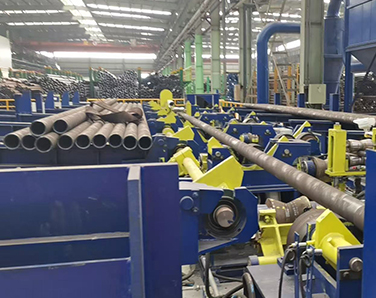
Next step: match the parameters to your product mix
Send your workpiece diameter range, material mix, and finish requirement, and West will confirm the corresponding motor power and feed speed configuration, sample arrangements, and delivery schedule.
Email: 348357379@qq.com | Tel / WhatsApp: +86 15261616622
Website: www.wstjxcn.com
Have Questions or Need More Details?
Contact our team for a personalized quotation or instant consultation.
Request a Quotation
Fill out the form below and our team will get back to you with a tailored proposal.
WhatsApp Direct Chat
Prefer to chat in real-time? Message us on WhatsApp for instant assistance & quick answers.
- Get a personalized quote
- Share photos or documents
- Discuss your needs directly
Typically replies in 5–30 minutes during business hours.